You Won’t Believe What I Ate in Mysore — A Foodie’s Secret Paradise
Mysore isn’t just palaces and yoga — it’s a flavor explosion hiding in plain sight. I went looking for culture but found something even richer: steaming dosas crisp as autumn leaves, fragrant filter coffee poured from great height, and sweet treats I’d never heard of. Locals guided me to stalls tucked down alleys, where tradition is served on banana leaves. This is food with soul, history, and heat. If you think you know Indian cuisine, Mysore will surprise you — quietly, deliciously, completely.
The Unexpected Heart of Mysore: Food Over Fanfare
While many travelers plan their visit around the resplendent Mysore Palace or the city’s renowned yoga schools, few anticipate the depth and warmth of its culinary soul. Mysore’s true heartbeat pulses not in grand halls but in the sizzle of ghee on hot griddles, in the rhythmic pounding of chutney, and in the quiet pride of cooks who’ve spent lifetimes mastering a single dish. The city’s food culture is not a performance for tourists — it is lived, daily, with reverence and routine. It reflects a legacy shaped by royal kitchens, temple offerings, and generations of home cooks who value balance, seasonality, and simplicity.
What sets Mysore apart is not extravagance, but authenticity. Unlike other Indian cities where global chains and fusion menus dominate, Mysore holds fast to its roots. Meals are still anchored in tradition, with recipes passed down orally, often unchanged for decades. The flavors are bold yet balanced — a harmony of spice, sourness, sweetness, and umami that tells a story of climate, geography, and community. Breakfast is not a quick bite but a ritual; dinner is not rushed but shared. Even the pace of eating feels different — slower, more intentional, as though each bite deserves attention.
For the mindful traveler, this creates a rare opportunity: to step beyond sightseeing and into the rhythm of daily life. A meal in Mysore is not just nourishment — it’s an invitation to connect. Whether seated on a plastic stool at a roadside stall or sharing a thali in a family home, the experience is one of inclusion. The food speaks without words, conveying hospitality, heritage, and a deep respect for craft. To taste Mysore is to understand it — not through brochures or guidebooks, but through the warmth of a server’s smile and the crisp edge of a freshly fried dosa.
Morning Rituals: How Mysore Wakes Up on Coffee and Batter
Dawn in Mysore arrives with the scent of fermenting batter and roasting coffee beans. As the first light touches the domes of the palace, small eateries across the city come alive with activity. In cramped kitchens, steel bowls of rice and lentil batter — left to ferment overnight — are stirred and poured onto hot tawas, their edges curling into golden lace. This is the foundation of Mysore’s beloved breakfast culture, a daily celebration of dosas, idlis, vadas, and the iconic filter coffee that fuels the city’s mornings.
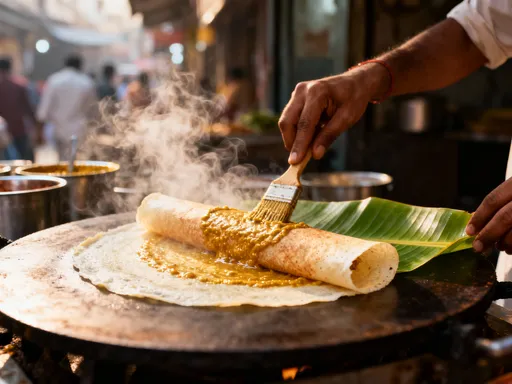
The dosa, in particular, is more than a dish — it’s a symbol of patience and precision. Made from a fermented blend of urad dal and rice, the batter develops its signature tang and airy texture over several hours. When cooked, it emerges thin, crisp, and fragrant, served piping hot with a trio of accompaniments: coconut chutney, tomato chutney, and sambar — a spiced lentil stew simmered with vegetables and tamarind. Each bite offers a contrast of textures and temperatures, a dance of heat and coolness, spice and creaminess.
Some of the most cherished breakfast spots in Mysore are unassuming — no signs, no websites, just a steady stream of regulars who know exactly where to go. At one such corner stall, workers, students, and retirees line up before sunrise, clutching steel plates and waiting for their turn. The servers move with practiced ease, folding dosas with one hand while pouring coffee from a height with the other — a technique that cools the brew and aerates it for a smoother taste. The experience is fast, efficient, and deeply communal. There’s no pretense, only warmth and the shared understanding that a good start to the day begins with good food.
Scientifically, the fermentation process behind dosas and idlis is as beneficial as it is traditional. It enhances digestibility, increases nutrient absorption, and introduces beneficial probiotics — making these morning staples not only delicious but nourishing. In a world increasingly obsessed with quick fixes and processed foods, Mysore’s breakfast culture stands as a quiet testament to the wisdom of slow, natural preparation. It’s a reminder that some of the healthiest foods are also the most humble.
The Royal Table: Traces of Wodeyar Feasts in Modern Eateries
The culinary identity of Mysore is inseparable from its royal past. For centuries, the Wodeyar dynasty ruled the kingdom with a deep appreciation for the arts — and the art of dining. Their kitchens were not merely places of sustenance but centers of innovation, where chefs experimented with spices, textures, and presentation to delight the royal family and honored guests. Today, echoes of those courtly feasts live on in the city’s most trusted eateries, where dishes once served on silver platters are now shared on banana leaves at modest tables.
One of the most famous legacies of the Wodeyar kitchen is Mysore pak — a rich, dense sweet made from ghee, gram flour, and sugar. Unlike the lighter sweets found elsewhere in India, Mysore pak has a fudgy, almost crystalline texture, born from careful cooking and constant stirring. It is said that the dish was first prepared in the royal kitchen for a visiting dignitary and was so well received that it earned a permanent place on the menu. Today, it is a staple at festivals, weddings, and temple offerings, its golden hue symbolizing prosperity and celebration.
Other royal influences can be seen in dishes like palya — a spiced vegetable stir-fry often made with beans, carrots, or cabbage — and kesari bath, a saffron-infused semolina pudding that glows like sunrise. These are not extravagant meals, but they carry the mark of refinement: a balance of flavors, a careful hand with spices, and an emphasis on seasonal ingredients. Even simple rice dishes are elevated with a pinch of saffron, a drizzle of ghee, or a garnish of fried cashews.
What’s remarkable is how these royal recipes have survived not in museums, but in everyday life. Families still prepare them at home, and small restaurants take pride in serving them exactly as they were decades ago. There is no need for reinvention — the authenticity is the appeal. When you eat a meal rooted in Wodeyar tradition, you’re not just tasting food; you’re experiencing history, one bite at a time. The past is not distant here — it is warm, fragrant, and served fresh every day.
Hidden Corners: Where Locals Eat (Not Tourists)
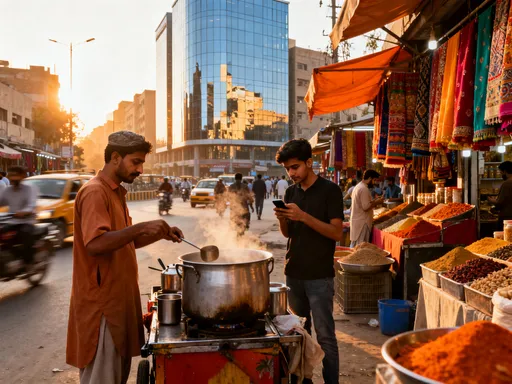
While guidebooks may highlight a few well-known restaurants, the real magic of Mysore’s food scene unfolds in places that don’t appear on maps. These are the unmarked stalls, the family-run canteens, the market-side counters where generations of cooks have perfected their craft away from the spotlight. To find them, you must listen — to the hum of conversation, the clatter of steel plates, the scent of frying spices carried on the breeze.
One such spot lies in a narrow lane behind the Devaraja Market, where a man in his seventies has been making the same masala dosa for over forty years. His stall has no name, no menu, and no seating — just a hot griddle, a wooden cart, and a steady line of customers who know exactly what they want. He works alone, folding dosas with one hand while ladling sambar with the other, his movements so practiced they seem choreographed. When asked about his secret, he smiles and says simply, “I cook for my neighbors. That’s all.”
Another gem is a tiny eatery near a residential colony, known only for its vadas — deep-fried lentil fritters that are crisp on the outside and fluffy within. The owner, a retired schoolteacher, opens only in the mornings and closes when the batter runs out. There’s no advertising, no online presence — just word of mouth and the loyalty of those who appreciate consistency over novelty. His vadas are served with a green chutney so fresh it tastes like crushed herbs, and a sambar that simmers for hours with tamarind and curry leaves.
Finding these places requires a shift in mindset. Instead of relying on apps or reviews, travelers are encouraged to follow the crowd, observe where locals queue, and ask auto drivers or shopkeepers for recommendations. A simple “Where do you eat?” can open doors to experiences far more meaningful than any five-star meal. Respect is key — arriving with curiosity rather than entitlement, eating slowly, and showing appreciation through gesture as much as words. In these hidden corners, food is not a commodity but a connection, a way of saying “you are welcome here.”
Sweet Secrets: Beyond Mysore Pak
While Mysore pak may be the city’s most famous sweet, it is only the beginning of a much richer tradition. Mysore’s dessert culture is vast and varied, shaped by temple rituals, seasonal festivals, and the rhythms of daily life. Sweets here are not mere indulgences — they are offerings, celebrations, and acts of care. From dawn to dusk, sweet shops hum with activity, their glass cases filled with golden discs, saffron strands, and powdery confections that dissolve on the tongue.
One beloved treat is obbattu, also known as holige — a flatbread stuffed with a sweet filling of jaggery, coconut, and lentils. Cooked on a griddle and brushed with ghee, it is both rich and comforting, often made at home during festivals like Ugadi and Diwali. Each family has its own variation, adjusting the ratio of jaggery to coconut or adding cardamom for fragrance. It is a dessert that feels personal, intimate — the kind of food made with love and shared with joy.
Then there is kesari bath, a semolina pudding dyed golden with saffron and sweetened with sugar. Light yet satisfying, it is commonly served at temples as prasadam — a sacred offering to devotees. The aroma alone is uplifting, a blend of roasted semolina, ghee, and saffron that fills the air like incense. Jalebi, too, has a special place in Mysore’s sweet repertoire. Served warm and soaked in sugar syrup, it is often paired with rabri — a thick, creamy reduction of milk flavored with cardamom and nuts. The contrast of the crisp, coiled jalebi and the cool, velvety rabri is a study in balance.
What unites these sweets is not just flavor, but meaning. They mark milestones — births, weddings, religious ceremonies — and are shared with family, friends, and strangers alike. Even on ordinary days, a small sweet is often offered with tea, a gesture of hospitality. In Mysore, dessert is not an afterthought — it is a language of generosity, a way of saying “life is sweet, and I want to share it with you.”
From Market to Plate: A Day in the Life of Mysore’s Ingredients
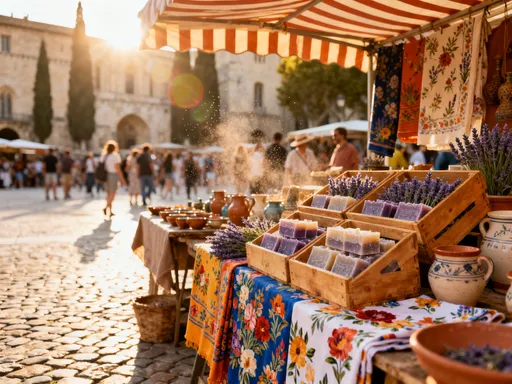
The brilliance of Mysore’s cuisine begins long before the first flame is lit — in the soil, the markets, and the hands that harvest and sell. A walk through Devaraja Market at sunrise reveals the foundation of the city’s flavors: pyramids of tamarind pods, baskets of fresh coconut, heaps of millets, and trays of golden jaggery. Vendors call out prices, arrange produce with care, and share tips on ripeness and seasonality. This is where the journey from farm to plate becomes visible, tangible, alive.
Tamarind, a cornerstone of Mysore’s sambar and chutneys, arrives in rough brown shells, cracked open to reveal sticky, tangy pulp. Coconut — used in chutneys, sweets, and curries — is sold both fresh and dried, grated on demand. Millets like ragi and jowar, once staples of rural diets, are making a comeback for their nutrition and resilience. And jaggery, the unrefined sugar made from sugarcane or palm sap, brings a deep, caramel-like sweetness to both savory and sweet dishes.
Many of these ingredients come from nearby villages, transported in the early hours to ensure freshness. Farmers and vendors often have long-standing relationships, built on trust and mutual respect. One spice seller explains that the quality of curry leaves depends on the season — tender and fragrant in the monsoon, more pungent in the summer. A coconut vendor notes that the water inside is sweeter in the cooler months. These details matter, not just to chefs but to everyday cooks who believe that great flavor starts with great ingredients.
What’s striking is the absence of excess. There are no plastic wraps, no imported goods, no artificial preservatives. Everything is sold loose, weighed on scales, and carried away in cloth bags or banana leaves. It’s a system rooted in sustainability, long before the word became fashionable. In this market, food is not a product — it is a cycle, a connection between land, labor, and table. To eat in Mysore is to participate in that cycle, to taste not just a dish, but a way of life.
How to Eat Like a True Mysorean: Practical Tips for Respectful Exploration
To truly experience Mysore’s food culture, one must eat not just with the mouth, but with the heart. This means embracing local customs, pacing yourself, and approaching meals with humility and curiosity. Begin by timing your day like a resident: breakfast early, lunch around noon, and dinner by eight. Many of the best eateries close by evening, so plan accordingly. Avoid rushing — meals are meant to be savored, not scarfed.
When possible, eat with your hands. It may feel unfamiliar at first, but it is the traditional way, allowing you to feel the temperature and texture of the food. Use your right hand to mix rice with sambar or chutney, shaping each bite with care. Don’t worry about perfection — what matters is the intention. And always wash your hands before and after, a small act of respect for the food and those who prepared it.
Navigating menus can be simple if you know a few key terms. “Thali” means a platter with a variety of dishes — ideal for sampling. “Spicy” can be requested as “less chili” if needed, though many dishes are naturally balanced. Most food in Mysore is vegetarian, reflecting local customs, but egg and dairy are common. If you have dietary restrictions, ask politely — most vendors are happy to accommodate with a nod or a quick adjustment.
Finally, show appreciation not just with money, but with presence. Smile, say “thank you,” and take your time. Avoid taking photos without permission, especially of people. The best reviews are not written online — they are shared in the moment, through a satisfied sigh, a second helping, or a quiet “this is delicious.” When you eat like a Mysorean, you’re not a guest — you’re part of the meal.
Conclusion
Mysore is more than a destination — it is a conversation. Between the past and present, between traveler and host, between flavor and memory. Its palaces are majestic, its yoga schools renowned, but its true gift lies in the shared moments over food. A dosa folded with care, a cup of coffee poured from height, a sweet offered with a smile — these are the gestures that linger long after the journey ends.
In a world that often values speed over substance, Mysore reminds us that authenticity cannot be rushed. It is found in the slow fermentation of batter, the patient stirring of sweets, the decades-long mastery of a single dish. It is found not in perfection, but in presence — in the willingness to sit, to wait, to taste, and to connect.
So when you visit, don’t just see Mysore. Taste it. Let the flavors guide you, let the people welcome you, and let each bite be an act of discovery. Because the most memorable journeys are not measured in miles, but in moments — one humble, heartfelt meal at a time.