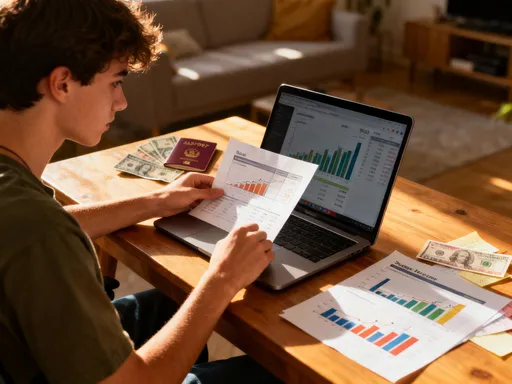
How I Smartly Allocated Assets for My Exchange Program—And Saved Thousands
Sending money abroad for an exchange program used to stress me out—until I learned how proper asset allocation changed everything. It wasn’t about earning more, but managing what I had smarter. I shifted funds, adjusted risk levels, and created a flexible financial cushion that covered surprises without panic. This is how I balanced growth, safety, and access—so you don’t have to overspend or compromise your goals. What started as a simple effort to reduce fees turned into a full financial strategy that saved me thousands and gave me peace of mind throughout my time overseas. The truth is, studying abroad doesn’t have to drain your savings if you manage your money like a careful investor.
The Hidden Financial Challenge of Exchange Programs
When most families think about the cost of an exchange program, they focus on tuition, airfare, and housing. These are visible expenses, easy to budget for. But beneath the surface lies a web of hidden financial pressures that can quietly erode even the most carefully planned budgets. Exchange rate fluctuations, international transaction fees, ATM surcharges, and unexpected living cost differences are just a few of the silent budget killers many students face. A meal that costs $8 at home might be $15 abroad—not because of inflation, but due to currency strength and local pricing. Over time, these small differences add up, often catching families off guard.
More importantly, financial strain doesn’t just affect spending—it impacts the student’s experience. Worrying about money can distract from academics, limit social opportunities, and increase stress. Some students cut back on essentials like food or transportation just to stay within budget, while others rely too heavily on credit cards, setting themselves up for post-program debt. The real challenge isn’t the total amount of money available, but how that money is managed across borders and time. Without a structured approach, funds can be misallocated—too much in a hard-to-access account, too little in emergency reserves, or exposed to unnecessary currency risk.
Consider the case of a student who transferred their entire semester budget to a foreign bank account in one lump sum. At the time, the exchange rate was favorable. But within weeks, the home currency strengthened, meaning every dollar spent now cost more in home currency terms. That single decision erased hundreds in value—money that could have covered textbooks, travel, or emergency needs. This kind of loss isn’t inevitable. It’s the result of treating international finances like a one-time transaction rather than an ongoing financial journey. The solution begins with recognizing that an exchange program isn’t just an academic endeavor—it’s a financial project that requires planning, monitoring, and adaptation.
Why Asset Allocation Matters More Than You Think
Asset allocation is often seen as a strategy for retirees or seasoned investors, but its principles are just as valuable for students managing funds across borders. At its core, asset allocation means dividing your money among different types of financial instruments and accounts based on your goals, timeline, and risk tolerance. For an exchange student, this means not keeping all funds in a single bank account or currency. Instead, it’s about creating a balanced structure that protects against loss, allows for growth, and ensures access when needed.
The power of asset allocation lies in its ability to reduce risk through diversification. If all your money is in a foreign bank account denominated in euros, and the euro suddenly drops in value, your purchasing power declines overnight. But if only part of your funds are in euros, with others held in stable home currency accounts or low-risk interest-bearing instruments, the impact is minimized. This doesn’t require complex investing. Simple tools like savings accounts in different currencies, short-term fixed deposits, or even digital wallets with multi-currency support can serve as effective allocation vehicles.
Moreover, asset allocation helps align your money with your timeline. The funds you’ll need in the first month—rent, groceries, transportation—should be highly accessible and low-risk. But the money set aside for later in the term, or for post-program travel, can afford to be in slightly higher-yielding, longer-term options. This staged approach ensures liquidity when it’s needed most, while still allowing some portion of your funds to work for you. For example, placing a portion of savings in a high-yield online savings account back home can generate modest interest without sacrificing safety. Over a six-month program, even a 1.5% annual return can add up—especially when combined with reduced fees and smarter spending.
Many students assume that because their stay is short-term, asset allocation doesn’t apply. But short timelines often mean less room for error. A financial mistake made in month one can’t be recovered over decades—it has to be fixed now. That’s why a thoughtful allocation strategy is not just helpful, but essential. It transforms a reactive, stressful financial experience into a proactive, controlled one. By treating your education budget like a mini investment portfolio, you gain clarity, confidence, and control.
Mapping Your Financial Journey: From Home Country to Host Nation
Every exchange program follows a financial lifecycle with distinct phases, each requiring a different approach to money management. Understanding these stages allows you to allocate assets more effectively and avoid common pitfalls. The journey typically begins in the home country, where planning and initial transfers take place. This is the time to set up accounts, lock in favorable exchange rates, and establish a budget framework. It’s also the best moment to build an emergency fund in a stable, accessible form—such as a high-liquidity savings account—before any money crosses borders.
Once abroad, the settling-in phase begins. This is when the largest initial expenses occur: security deposits, local transportation passes, groceries, and orientation costs. During this time, access to liquid funds is critical. Relying on credit cards or delayed bank transfers can lead to fees and stress. A better approach is to have a portion of funds already converted and available in the local currency, either through a pre-loaded travel card or a local bank account. This ensures smooth onboarding without financial friction.
Mid-term stability is the next stage, typically lasting several weeks to months. By now, the student has settled into routines, and spending becomes more predictable. This is the ideal time to review the initial allocation and make adjustments. For example, if exchange rates have improved, it may be wise to convert additional funds at the better rate. Alternatively, if the budget is on track, a small portion of savings could be placed in a low-risk, interest-bearing account to earn modest returns. The key is maintaining flexibility—being able to shift funds as conditions change without incurring high costs.
Finally, the return planning phase begins in the last few weeks. This is when students must decide what to do with leftover funds. Converting money back too late can expose them to unfavorable rates, while converting too early risks losing access if unexpected costs arise. A smart strategy is to keep a small balance in the local account for final expenses, while gradually transferring the remainder back home at favorable rates. Some students also use this time to purchase gifts or make final purchases that offer better value abroad. By mapping the financial journey in advance, families can anticipate needs, reduce surprises, and make more informed decisions at each step.
Building a Balanced Mix: Safety, Growth, and Accessibility
The foundation of any successful financial plan for an exchange program rests on three pillars: safety, growth, and accessibility. Safety ensures that your money is protected from loss, especially from currency swings or bank failures. Growth helps your funds keep pace with inflation and potentially earn modest returns. Accessibility means you can get to your money when you need it, without delays or excessive fees. Balancing these three elements is the key to sustainable financial management abroad.
Safety starts with where you keep your money. Not all banks or financial platforms offer the same level of protection. In many countries, deposit insurance covers a certain amount per account, so it’s wise not to exceed those limits in a single institution. Keeping emergency funds in a stable, insured savings account—either at home or in the host country—provides a reliable buffer. Avoiding high-risk investments or speculative instruments is crucial, especially for short-term needs. The goal is preservation, not profit.
Growth, in this context, doesn’t mean chasing high returns. For most exchange students, growth means modest interest earnings and protection against inflation. A savings account yielding 1.5% to 2% annually may not seem impressive, but over six months, it can make a meaningful difference—especially when combined with reduced fees. Some digital banks offer higher yields with no added risk, making them attractive options for holding non-immediate funds. Even small gains, when compounded with smart spending, contribute to overall savings.
Accessibility is often overlooked but just as important. You can have the safest, highest-yielding account in the world, but if you can’t access it when you need cash, it’s of little use. This is where tools like multi-currency debit cards, mobile banking apps, and international ATM networks become valuable. They allow you to withdraw local currency quickly and at low cost. Setting up automatic transfers from a primary account to a spending account can also help maintain a steady cash flow without constant manual management. The ideal mix includes one highly liquid account for daily use, a separate emergency fund in a stable instrument, and a small portion in a slightly higher-yielding option for mid-term funds.
Technology plays a key role in achieving this balance. Many modern banking platforms allow users to hold, convert, and spend multiple currencies within a single app. These tools reduce the need for multiple bank visits, minimize conversion fees, and provide real-time spending insights. By combining the right accounts with the right tools, students can create a financial ecosystem that supports their needs without complexity. The result is a system that works quietly in the background, giving peace of mind and freeing mental energy for studies and experiences.
Managing Currency Risks Without Being a Finance Expert
Currency risk is one of the most significant yet misunderstood challenges in international education. When you send money from your home country to your host nation, the exchange rate determines how much you actually receive. These rates fluctuate daily based on global markets, economic data, and geopolitical events. A rate that looks favorable today might weaken tomorrow, turning what seemed like a smart transfer into a costly mistake. The good news is that you don’t need to be a currency trader to protect yourself—you just need a few smart strategies.
One of the most effective tools is timing. Instead of transferring all your funds at once, consider splitting the transfer into smaller amounts over time. This approach, known as dollar-cost averaging, reduces the risk of converting at a bad rate. If the exchange rate drops after your first transfer, your next transfer will get more local currency for the same amount. Over time, this smooths out volatility and leads to a better average rate. It also prevents the emotional trap of trying to “time the market”—a strategy even professionals struggle with.
Another powerful option is using multi-currency accounts. These accounts allow you to hold money in different currencies and convert only when rates are favorable. For example, you can keep a portion of your funds in your home currency and wait for a strong rate before converting to euros or yen. Some platforms even offer rate alerts, notifying you when a target exchange rate is reached. This gives you control without requiring constant monitoring.
It’s also important to understand the difference between the mid-market rate and what banks or money transfer services charge. Many institutions add hidden markups of 3% to 5% or more, which can cost hundreds over a semester. Using transparent, low-fee services—often digital platforms—can save significant money. Always compare rates before transferring. Additionally, avoid converting cash at airports or hotels, where spreads are widest. With a little research and planning, you can protect your purchasing power and keep more of your money where it belongs—in your pocket.
Tools and Habits That Keep Your Plan on Track
Even the best financial plan will fail without consistent habits and reliable tools. Budgeting isn’t a one-time task—it’s an ongoing process that requires attention and discipline. The most successful exchange students don’t have more money; they have better systems. Technology makes it easier than ever to track spending, automate transfers, and stay within budget, even in a foreign environment.
Budget tracking apps are among the most valuable tools. These apps connect to your bank accounts, categorize expenses, and provide real-time insights into spending patterns. Seeing how much you’ve spent on dining, transportation, or entertainment helps you identify areas where you can cut back. Some apps even allow you to set monthly limits and receive alerts when you’re approaching them. This kind of feedback loop builds awareness and prevents small overspending from turning into big shortfalls.
Automated transfers are another powerful habit. Setting up a weekly or monthly transfer from a primary savings account to a spending account ensures a steady flow of funds without the temptation to overspend. It also reduces the mental load of managing money daily. Similarly, scheduling recurring payments for rent or phone bills avoids late fees and keeps your credit standing strong.
Equally important are the psychological habits that support financial discipline. Lifestyle inflation—spending more because you’re in a new place—is a common trap. Just because your friends are eating out every night doesn’t mean you have to. Sticking to a personal budget, even when others don’t, is a sign of maturity and foresight. Regular check-ins—weekly or monthly—help you assess progress, adjust for unexpected costs, and celebrate small wins. These routines build financial resilience and confidence, turning money management from a source of stress into a source of empowerment.
Learning from Real Mistakes: What Most Exchange Students Get Wrong
Mistakes are inevitable, but they don’t have to be costly. Many exchange students repeat the same financial errors, often because they lack guidance or assume their situation is unique. One of the most common mistakes is waiting too long to plan. Some students wait until days before departure to set up accounts or transfer money, leaving them vulnerable to poor rates and last-minute fees. Starting the financial planning process early—ideally months in advance—allows time to research options, compare services, and make informed decisions.
Another frequent error is ignoring fees. International transfers, ATM withdrawals, and currency conversions often come with hidden charges that can add up quickly. A $5 ATM fee here, a 4% conversion markup there—these small costs erode your budget over time. Students who fail to account for these fees often run short of funds by mid-term. The fix is simple: always read the fine print, compare service providers, and choose low-fee options whenever possible.
Over-reliance on credit cards is another pitfall. While credit cards offer convenience and rewards, they can lead to debt if not managed carefully. High interest rates, foreign transaction fees, and minimum payment traps can turn a short-term purchase into a long-term burden. Using credit cards only for planned expenses—and paying the balance in full each month—helps avoid these risks. Better yet, using a debit card linked to a pre-funded account ensures you only spend what you have.
Finally, many students fail to plan for the return phase. Leftover funds, unused transit passes, or forgotten bank accounts often go unclaimed. Taking time at the end of the program to close accounts, convert remaining balances, and review expenses helps close the financial loop. These lessons, learned through real experiences, highlight the importance of preparation, awareness, and discipline. By recognizing these common mistakes early, students can avoid them and turn their exchange experience into a financial success story.
Conclusion: Turning Education Abroad Into a Financial Win
Studying overseas doesn’t have to mean financial strain. With thoughtful asset allocation, the exchange experience becomes not only academically enriching but financially empowering. By planning ahead, staying flexible, and managing risks wisely, students can protect their resources, reduce stress, and gain lifelong money skills. It’s not about having more—it’s about using what you have, better. The strategies outlined here—diversifying funds, mapping financial phases, managing currency risk, and building disciplined habits—are not complex, but they are powerful. They transform a potentially overwhelming process into a manageable, even rewarding, journey. When money is handled with care, the true value of an exchange program multiplies: it’s not just an investment in education, but in financial wisdom that lasts a lifetime.